Ink trap
Also called Ink well
A notch cut out of a letter where two strokes meet, so that ink spreading at speed fills the gap instead of closing the joint into a blob.
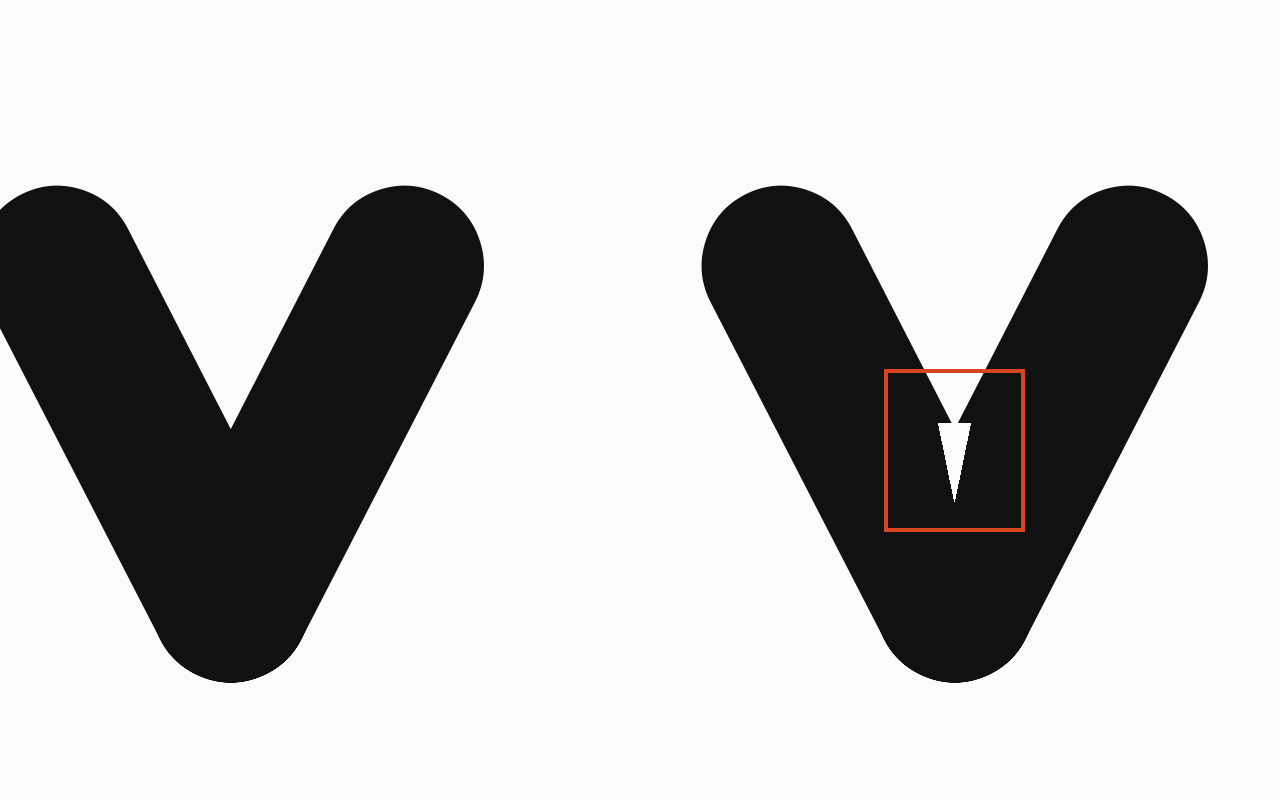
Near it
 Counter
 Aperture
 Optical size
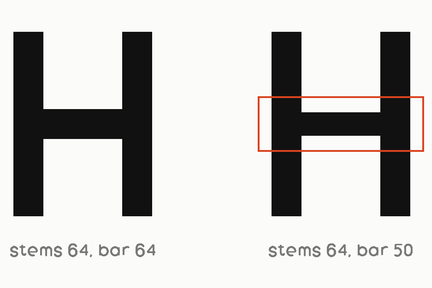 Optical correction
What it is made of
| what it is | a notch cut out of a junction where two strokes meet, so that ink spreading at small sizes or on absorbent stock fills the notch instead of clogging the joint | |
| measured on this shelf, and the measurement is a nil | there is not one, and there could not be | every glyph here is built from strokes that are lines and circular arcs, stroked with a round or a butt cap. A trap is material REMOVED at a joint, and nothing in that engine removes anything: the joints are the union of the strokes. The word "trap" does appear in the engine's own source twice and both times it means a coding pitfall, which is the kind of thing a grep answers wrongly and a reading answers right |
| so this entry describes the thing and not our version of it | UNMEASURED against our own work | and unlike most of the nils on this shelf it is not an omission: it is what the engine is |
Where it came from
A production fix rather than a style. Matthew Carter's Bell Centennial of 1978, drawn for telephone directories printed small and fast on newsprint, is the face the term is taught from.
Done well
- Bell Centennial, Matthew Carter, 1978